King James Version
When Jesus saw their faith, he said unto the sick of the palsy, Son, thy sins be forgiven thee.
The Way Version
Yeshua, seeing their faith, said to the paralytic, "Son, your moral failures are forgiven you."
Get the full 66-book Bible EPUB for Kindle or e-reader →
These passages compare the English theological word sin with TWV interpretive renderings; they are not a reconstructed verbatim Aramaic original.
When Jesus saw their faith, he said unto the sick of the palsy, Son, thy sins be forgiven thee.
Yeshua, seeing their faith, said to the paralytic, "Son, your moral failures are forgiven you."
For all have sinned, and come short of the glory of God;
for all have failed morally, and fall short of the glory of God;
If we confess our sins, he is faithful and just to forgive us our sins, and to cleanse us from all unrighteousness.
If we confess our moral failures, God is faithful and righteous to forgive our moral failures, and to cleanse us from all unrighteousness.
And she shall bring forth a son, and thou shalt call his name JESUS: for he shall save his people from their sins.
She shall bring forth a son. You shall call his name Yeshua, for he shall save his people from their moral failures."
For I delivered unto you first of all that which I also received, how that Christ died for our sins according to the scriptures;
For I delivered to you first of all that which I also received: that Messiah died for our moral failures according to the Scriptures,
She said, No man, Lord. And Jesus said unto her, Neither do I condemn thee: go, and sin no more.
She said, "No one, Master." Yeshua said, "Neither do I condemn you. Go your way. From now on, do no wrong again."
Want the full Bible for your Kindle or e-reader? Enter your name and email below, and we'll send you the complete 66-book Bible as an EPUB now.
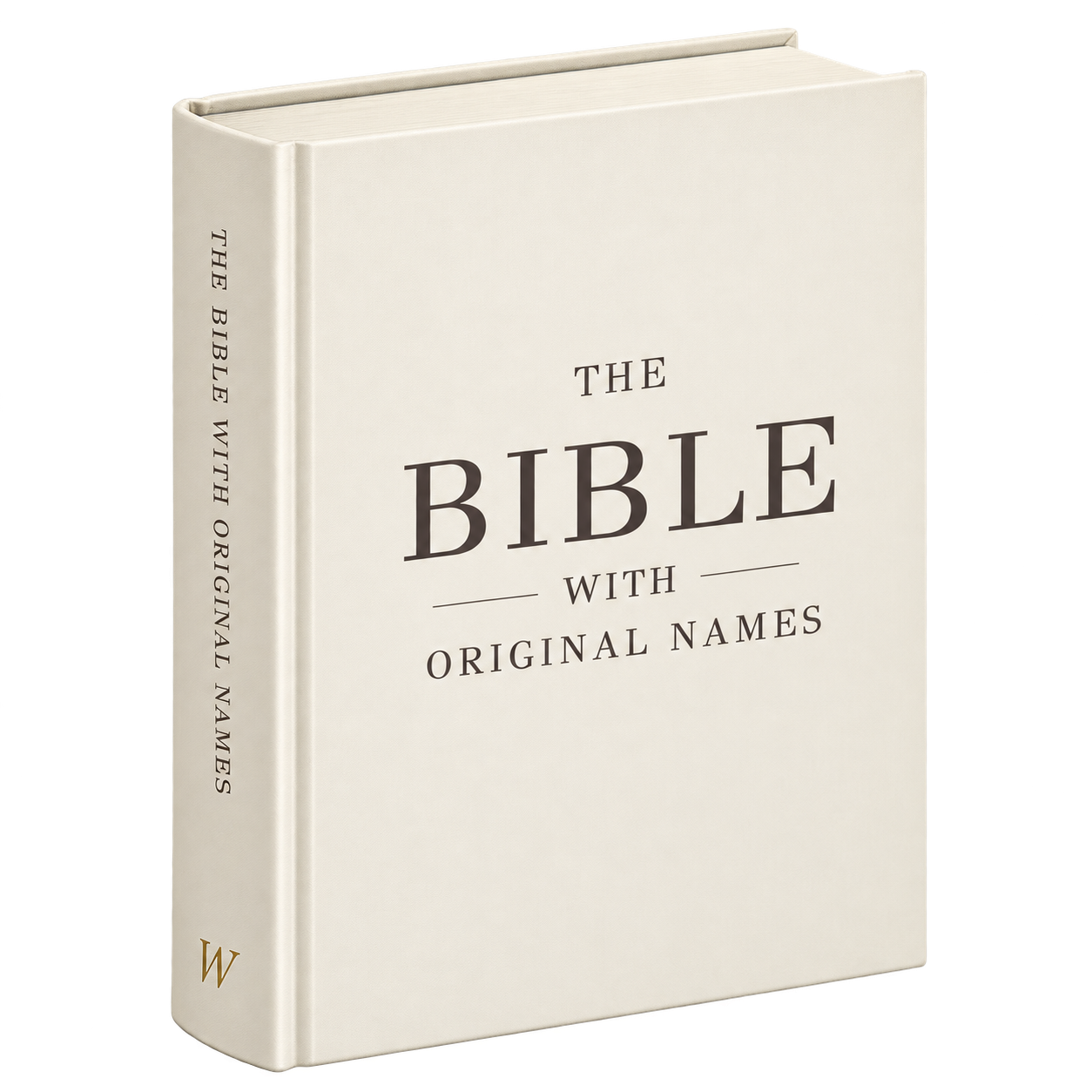
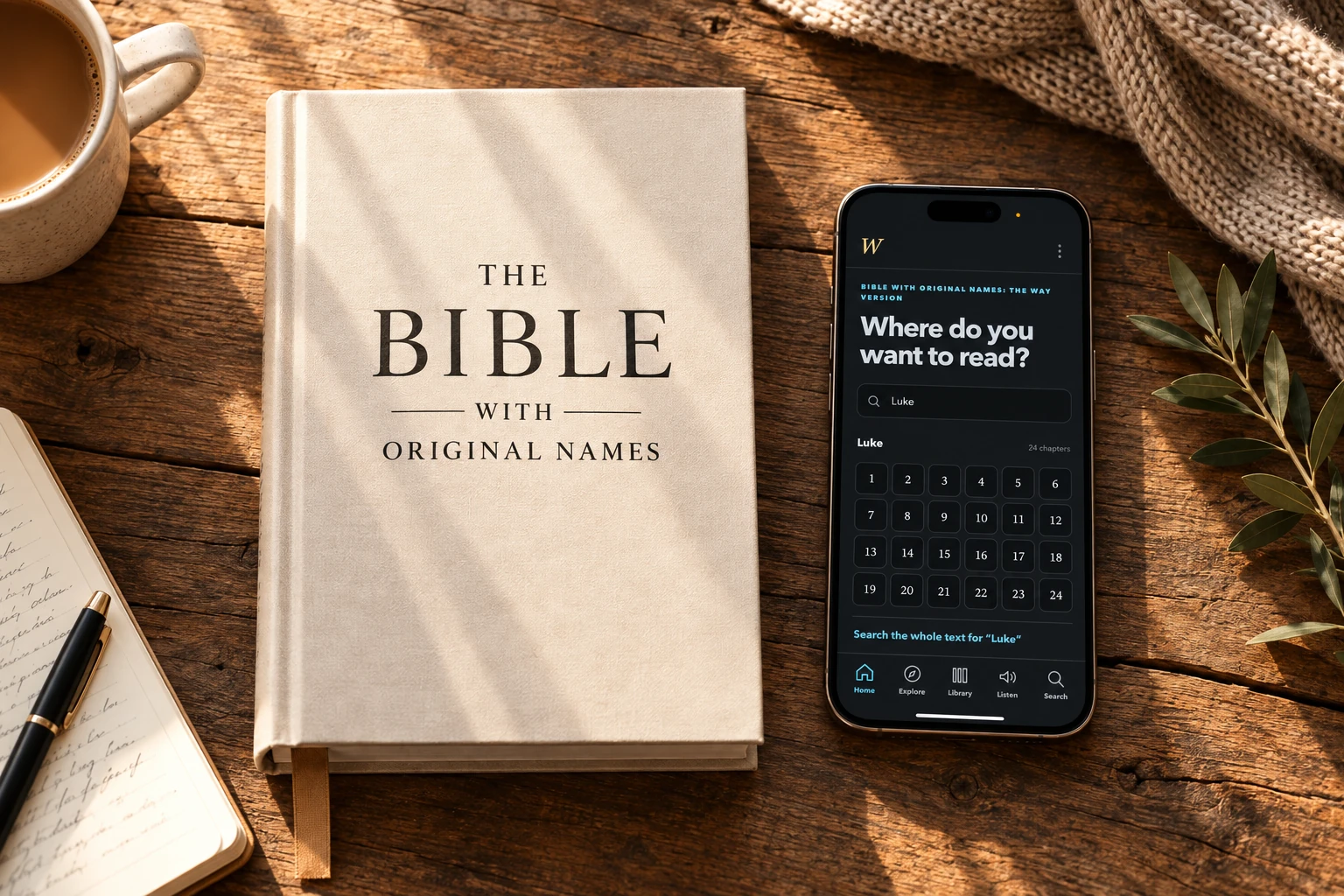
We’ve published The Bible with Original Names as a complete 66-book hardcover, alongside the free digital edition. It belongs on the desk as much as the shelf: a translation to read closely, annotate, and compare with the one you already know.
Start with a passage. What does it say, where did its language come from, and how have people understood it? Compare historical sources and interpretations, then discuss what those ideas may mean for relationships and communities today.
Share a question, a new observation or a different reading. Believers, nonreligious readers and those somewhere between are welcome. A useful discussion can end with more to investigate.
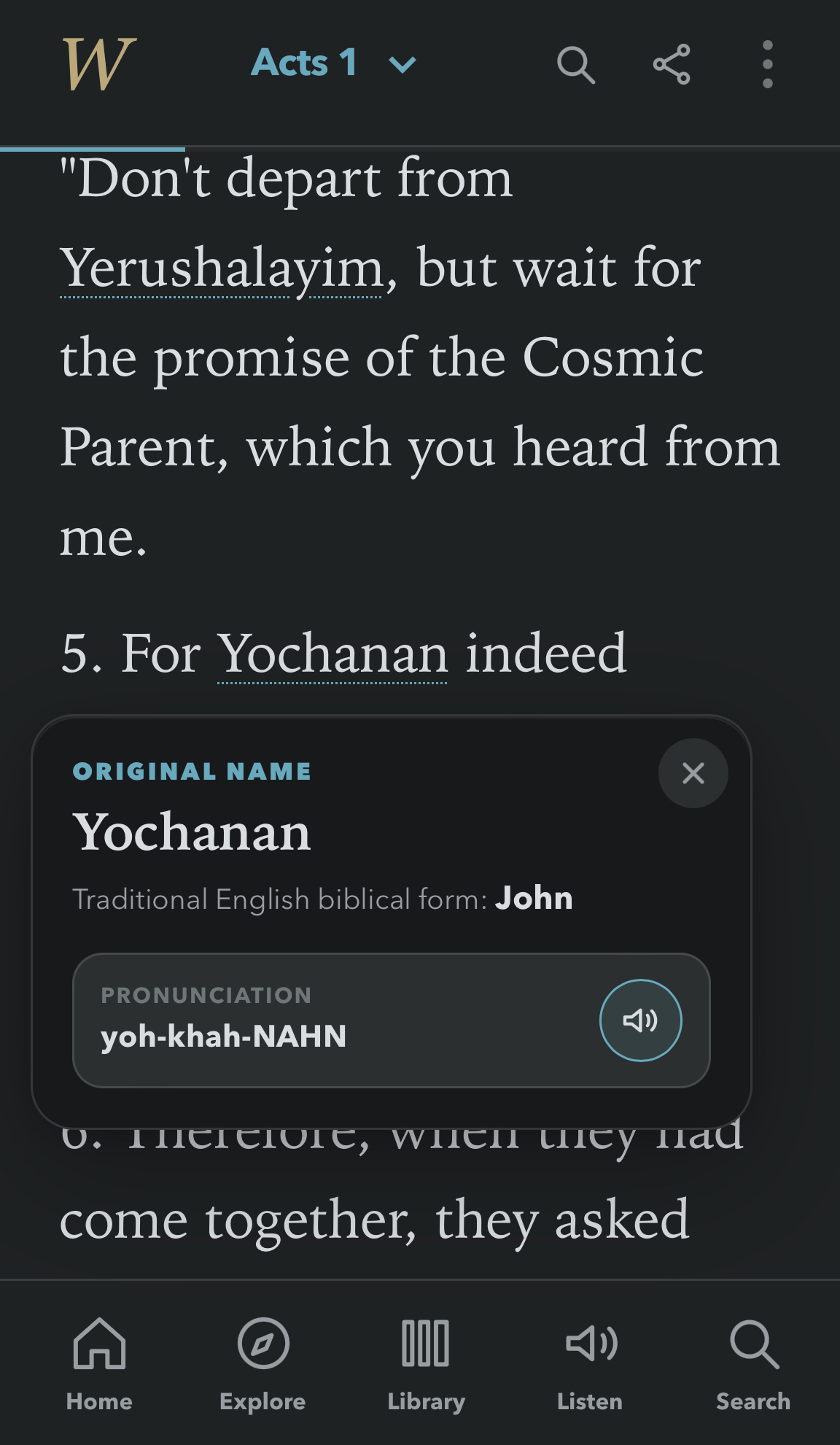
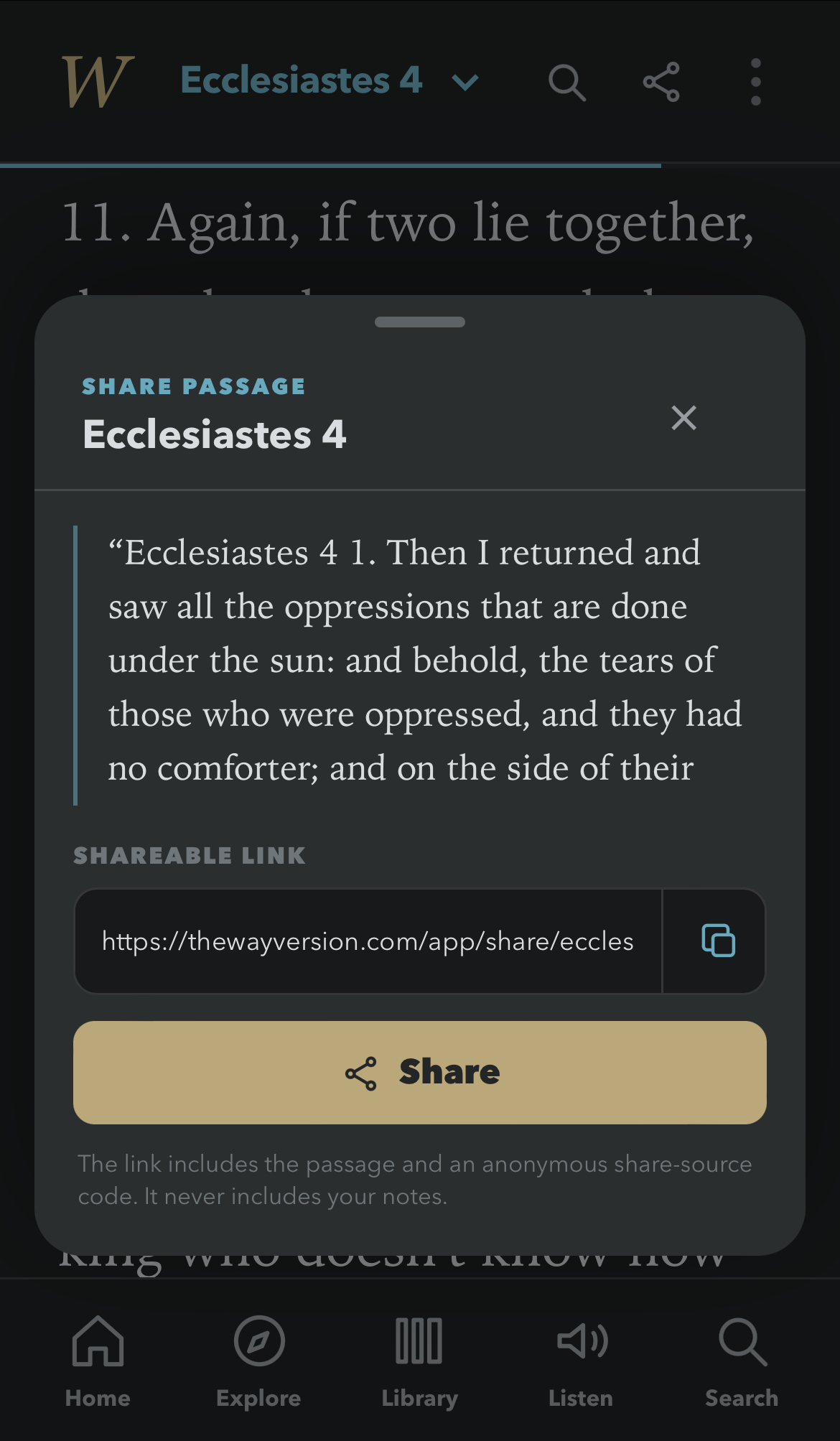
We’ve brought the complete edition to iPhone and Android. Tap a name to find its familiar English form and hear pronunciation, save passages, and share verses directly from the text.
Prefer your browser? Read free online →
Start with the Bible, see the translation research, or join the conversation about the text.