King James Version
The book of the generation of Jesus Christ, the son of David, the son of Abraham.
The Way Version
The scroll of the generations of Yeshua the Messiah, son of Dawid, son of Avraham.
Get the full 66-book Bible EPUB for Kindle or e-reader →
Numbered answers about Scripture, original names, translation, women in early Christianity and the text's history. Scan the short answer, then select More → to see its complete page and sources.
In The Way Version, the Twelve are shown with selected earlier-language name forms, including Shimon, Ya’akov and Yochanan.
More →Yeshua is a form of the Hebrew Yehoshua, often associated with the meaning ‘YHWH saves.’
More →Jesus likely had a Hebrew or Aramaic name usually written Yeshua; surviving Gospels use Greek Iēsous.
More →The Way Version prints Yeshua where many English editions have Jesus, and is free to read.
More →Elohim can refer to God, a god or gods depending on context; its form is plural but can take singular agreement.
More →In Genesis 1, Elohim refers to the God who creates; other passages require attention to context.
More →YHWH is four Hebrew consonants; Yahweh is a widely used but not certain pronunciation.
More →Some editions use Yahweh; The Way Version instead prints the consonantal form YHWH.
More →The Bible with Original Names prints Hebrew-form names such as Yeshua, Dawid, Yochanan and Elohim.
More →A Sacred Name Bible deliberately retains selected Hebrew-form names rather than always using conventional substitutes.
More →David comes from Hebrew Dawid (דָּוִד), which The Way Version displays in its text.
More →Mary's name is linked to the Semitic Maryam or Miriam and appears in Greek as Mariam or Maria.
More →James and Jacob trace to Ya’akov through Greek Iakōbos and later English transmission.
More →John corresponds to the Hebrew Yochanan, associated with YHWH showing grace.
More →Shimon is Simon; Kepha is the Aramaic nickname related to Greek Petros and English Peter.
More →Hebrew ruach can mean wind, breath or spirit; exact sense varies by passage.
More →Aramaic was important to Jesus' world, alongside Hebrew and Greek in their settings.
More →The Peshitta is a Syriac-language Bible, not a recorded transcript of Jesus' words.
More →Pauline letters survive in Greek; scholarship distinguishes accepted and disputed attributions.
More →Saul/Shaul and Paul were alternate names used by the same person, not a formal renaming ceremony.
More →The name was not changed by a single documented decision. A Hebrew or Aramaic form usually written Yeshua passed into Greek as Iēsous, then through Latin and English as Jesus. These normal language changes did not make the English form fraudulent; The Way Version chooses to display Yeshua to make the earlier setting visible.
More →A common Aramaic root for turning or returning is t-w-b; in Syriac script it can be written ܬܘܒ. That gives useful background for calls to turn back, but the canonical Greek Gospels use words such as metanoeite; their meaning must be read in each literary context. No single Aramaic gloss replaces the surviving Greek text.
More →Aramaic has several ways to discuss wrongdoing. A Syriac noun is ܚܛܵܗܵܐ (ḥṭāhā), often glossed as sin or fault, from a Semitic root related to erring. It does not follow that every biblical use of sin means only 'missing a target'; context, dialect, and the actual Hebrew or Greek source matter.
More →Yes. Genesis 1:1–2:3 presents a structured sequence of creation, while Genesis 2:4b–3:24 tells a garden-centered story of the human and the woman. Scholars often describe the first as Priestly (P) and the second as non-Priestly or traditionally Yahwist (J); the precise source history is debated. Both accounts stand together in the received book.
More →Some English translations use man or men for ancient terms that can refer to people generally, while other passages really are addressed to men in patriarchal settings. Greek anthrōpos often means human being, but anēr usually means man or husband. The Way Version examines each passage rather than changing all masculine language automatically.
More →Sometimes, yes. Hebrew adam can refer to humanity, and Greek anthrōpos can refer to a human person regardless of sex. That is different from passages using a specifically male term or depicting genuinely male-only institutions. The Way Version's 'people' wording in some passages aims to reflect the source's actual scope.
More →The Greek plural adelphoi can address a whole community of siblings or fellow believers, including women, even though its form is masculine plural. Translators may choose brothers, brothers and sisters, or fellow believers depending on context. This is a translation choice grounded in language, not an extra group of people added to the text.
More →Early Christian writings name women as coworkers, patrons, hosts, witnesses, and people carrying important responsibilities. Phoebe in Romans 16 and Junia in Romans 16:7 are especially discussed. Which later church offices correspond to those roles is debated, so the evidence should be read without pretending all communities were the same.
More →Paul describes Phoebe with Greek diakonos and prostatis in Romans 16:1–2. English versions use servant, minister, deacon, helper, or patron, reflecting debate about her exact role and title. The text clearly presents her as a significant coworker, not as someone absent from early Christian ministry.
More →The name evidence strongly favors Junia as a woman in Romans 16:7. A separate grammatical question remains: is she described as prominent among the apostles or well known to them? The Way Version's comparison begins with the Greek wording and historical reception instead of erasing that debate.
More →Women appear in early Christian sources as patrons, hosts, missionaries' coworkers, witnesses and participants in assemblies. Their roles varied by place and period, and some later institutions restricted them. Looking at Phoebe, Junia, and Mary Magdalene helps recover a more textured picture without imposing modern job titles on the first century.
More →Ancient Hebrew and Greek commonly use grammatical gender, and biblical traditions also use father, king, mother and other images. English he-language reflects both source grammar and long translation conventions; it does not mean every biblical image of God is biologically male. The Way Version evaluates pronouns and metaphors passage by passage.
More →Many New Testament letters address mixed congregations, so a masculine plural such as Greek adelphoi may include women as fellow believers. Other instructions have specific historical addressees. The Way Version weighs audience, grammar, and passage context instead of assuming every old-English 'brothers' excluded women.
More →YHWH represents the four Hebrew consonants of the divine name (יהוה). Many scholars reconstruct a pronunciation close to 'Yahweh', but complete certainty about its ancient vocalization is not possible. The Way Version prints YHWH rather than claiming to recover a universally certain pronunciation.
More →Jehovah arose in later Christian usage from a Latinized reading of the Hebrew divine-name consonants combined with vowel signs preserved in the Masoretic tradition. It is not simply the original biblical pronunciation. Yahweh is a common scholarly reconstruction, while The Way Version displays YHWH.
More →Messianic Jewish movements affirm Yeshua (Jesus) as Messiah while retaining varied forms of Jewish identity and practice. They share many New Testament beliefs with Christian traditions but understand their communal identity differently. Most mainstream Jewish denominations do not recognize Messianic Judaism as a branch of Judaism; participants' identities and practices vary.
More →Yes, some people who identify as Jewish believe Jesus (Yeshua) is the Messiah, including some who identify as Messianic Jews. Most Jewish religious communities do not accept Jesus as Messiah, and there is no single view shared by every Jewish person. Jewish identity can involve ancestry, culture, community and religion, so respectful wording matters.
More →Some Messianic and Sacred Name editions preserve Hebrew-form personal names, titles, or Jewish-context vocabulary to foreground the text's setting. Editions differ substantially in canon, wording and editorial method. The Way Version also uses selected original-form names, but it is a distinct English translation project with its own documented decisions.
More →The Bible's collections formed through centuries of use, copying, and discussion among Jewish and Christian communities. Different churches still preserve overlapping but nonidentical canons. The Council of Nicaea did not create the Bible in a single vote; later lists and councils clarified particular traditions.
More →English Bibles differ because translators make choices about ancient words, source manuscripts and contemporary language. Manuscript variants and actual translation decisions should be examined separately; disagreement is not proof of a single secret rewrite. The Way Version publishes its method and change records so readers can inspect those choices.
More →See Yeshua, YHWH, Elohim, the Twelve and early communities in the actual biblical text.
The book of the generation of Jesus Christ, the son of David, the son of Abraham.
The scroll of the generations of Yeshua the Messiah, son of Dawid, son of Avraham.
The LORD is my shepherd; I shall not want.
YHWH is my shepherd: I shall lack nothing.
In the beginning God created the heaven and the earth.
In the beginning Elohim created the heavens and the earth.
And James the son of Zebedee, and John the brother of James; and he surnamed them Boanerges, which is, The sons of thunder:
Ya'akov the son of Zebedee; Yochanan, the brother of Ya'akov, and he surnamed them Boanerges, which means, Sons of Thunder;
I commend unto you Phebe our sister, which is a servant of the church which is at Cenchrea:
I commend to you Phoebe our sister, who is a deacon of the assembly that is in Kenchreai,
And Jesus increased in wisdom and stature, and in favour with God and man.
And Yeshua increased in wisdom and stature, and in favor with Elohim and the people.
Get the free 66-book Bible EPUB for Kindle or another e-reader. Enter your name and email on the dedicated EPUB page and receive the reading file.
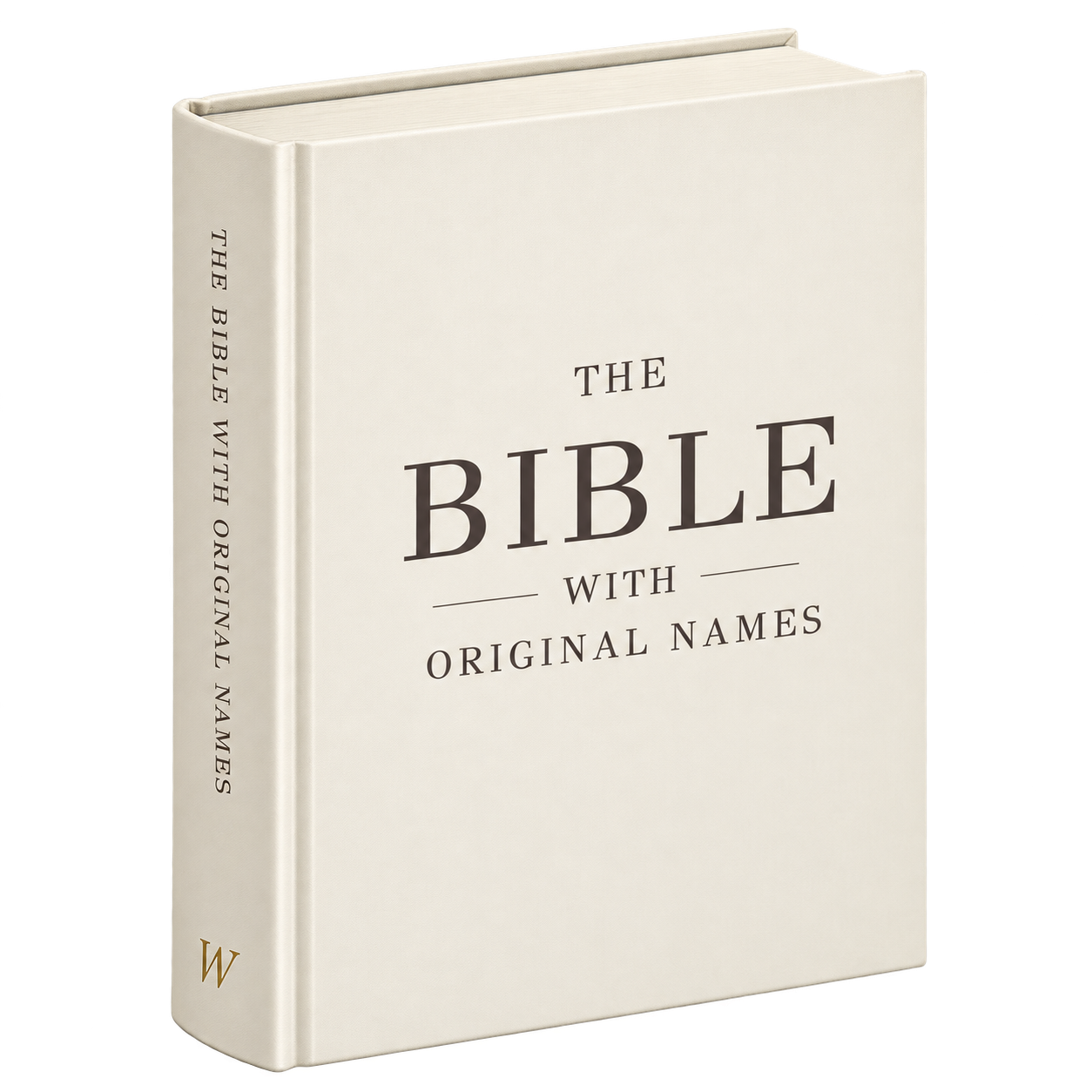
We’ve published The Bible with Original Names as a complete 66-book hardcover, alongside the free digital edition. It belongs on the desk as much as the shelf: a translation to read closely, annotate, and compare with the one you already know.
Start with a passage. What does it say, where did its language come from, and how have people understood it? Compare historical sources and interpretations, then discuss what those ideas may mean for relationships and communities today.
Share a question, a new observation or a different reading. Believers, nonreligious readers and those somewhere between are welcome. A useful discussion can end with more to investigate.
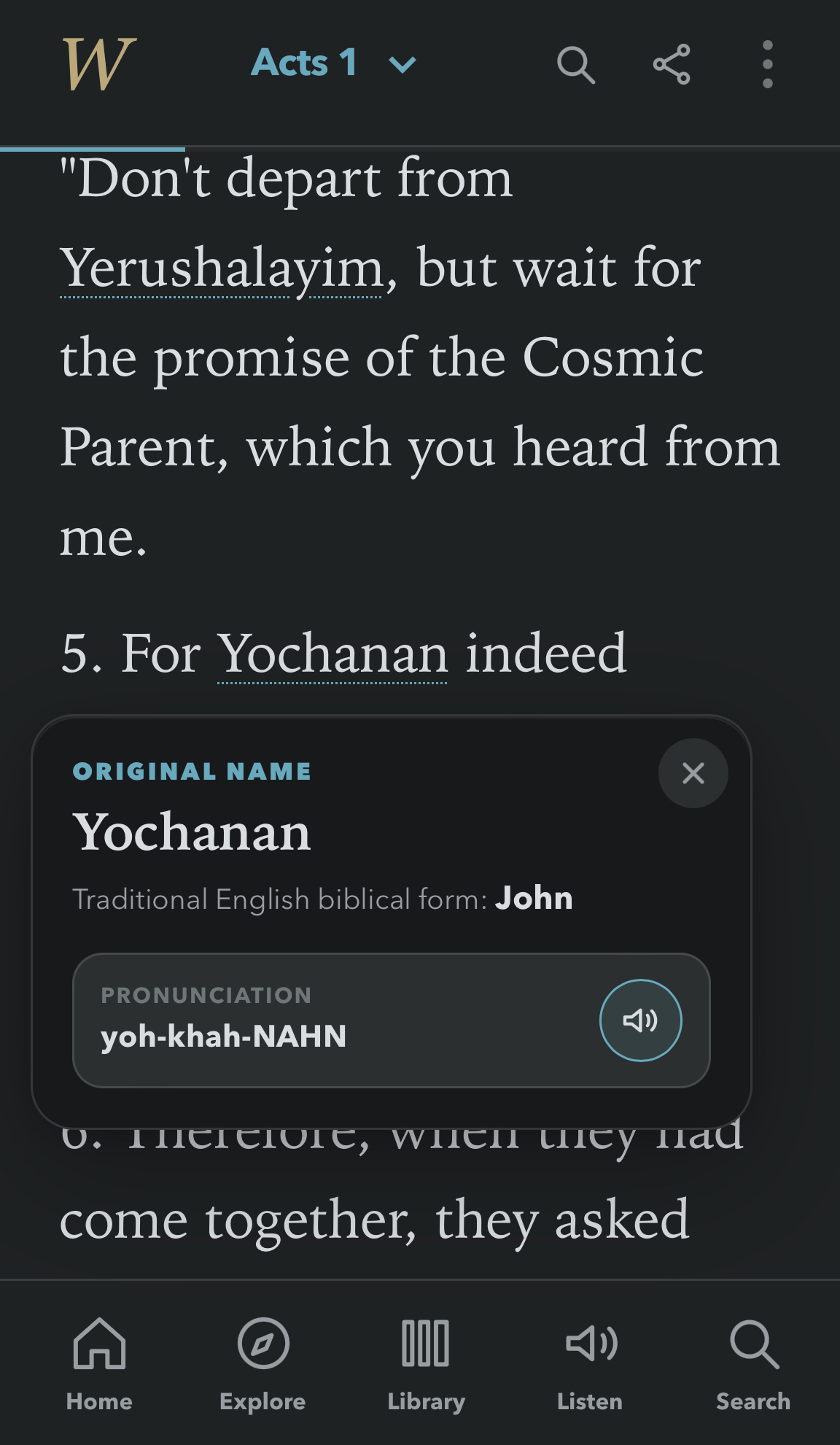
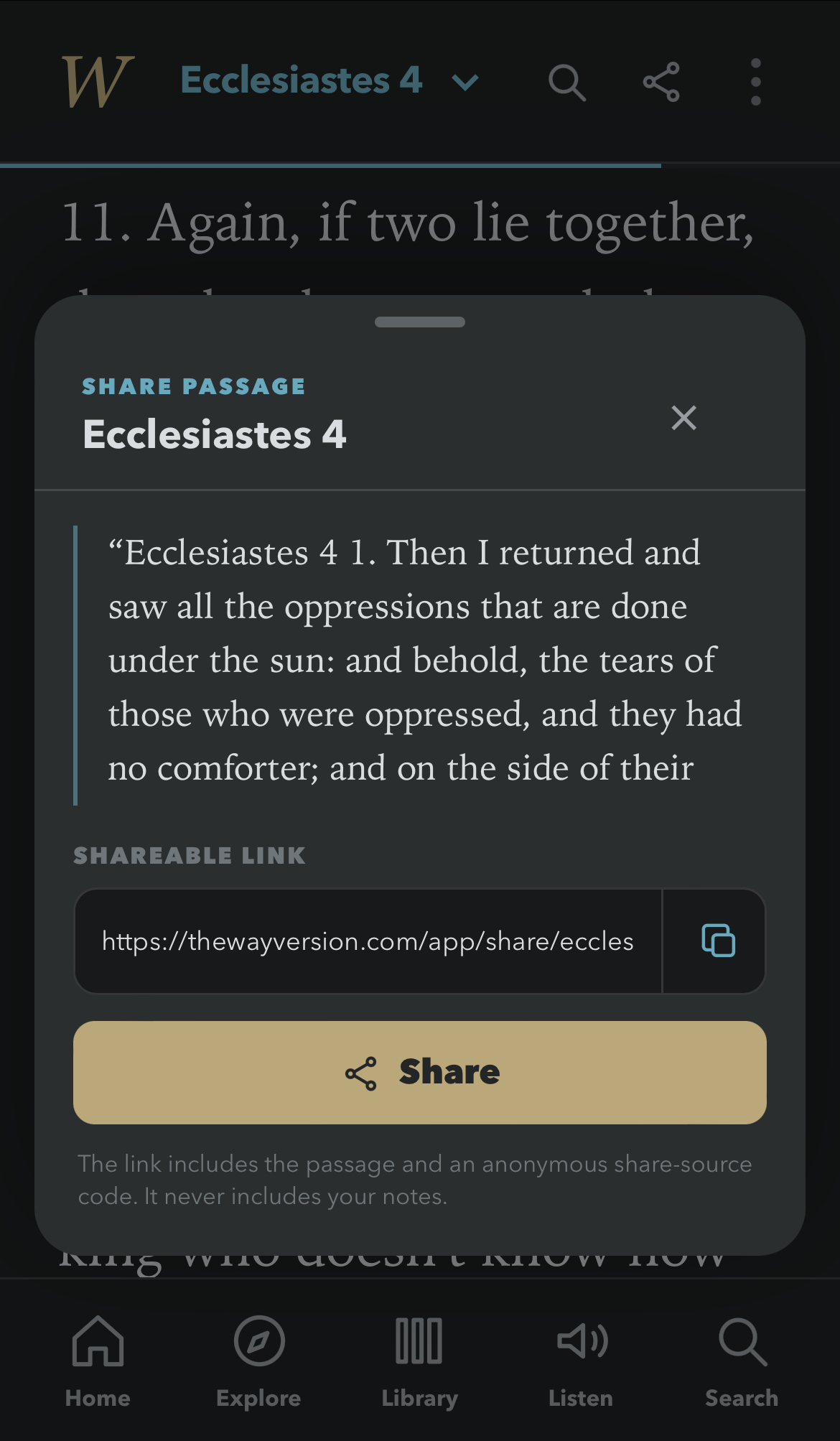
We’ve brought the complete edition to iPhone and Android. Tap a name to find its familiar English form and hear pronunciation, save passages, and share verses directly from the text.
Prefer your browser? Read free online →
Start with the Bible, see the translation research, or join the conversation about the text.